Bedroom Planning
Bed Base Types Explained: Slatted, Platform, Box Spring, and Adjustable Designs
A bed base does more than lift a mattress off the floor. Its construction can influence support, ventilation, bed height, storage options, and how easily your room works day to day. Here’s how the most common bed base styles compare—and what to check before choosing one.
When a mattress feels uncomfortable, the mattress itself is an obvious suspect. But the support beneath it matters, too. A base that does not suit a mattress can affect how evenly the mattress rests, while a bulky frame can make a small room feel crowded or leave awkwardly little space for storage. Even the difference between a low platform and a tall box-spring setup can change the look and everyday feel of a bedroom.
There is no single best bed base for every home. Slatted frames, solid platforms, box springs, and adjustable bases each solve different problems. The right choice depends first on the mattress maker’s support requirements, then on practical details such as room dimensions, preferred bed height, cleaning access, and whether you want to store belongings underneath.
Think of the base as part of the whole sleep setup rather than a finishing touch. A few minutes spent checking compatibility and measuring the room can prevent an expensive mismatch—and help create a bed that feels considered, comfortable, and easy to live with.
What a bed base actually does
A bed base supports the mattress and transfers its weight to the floor. Depending on its design, it may also help keep the mattress in position, raise it to a more convenient height, allow air to circulate beneath it, and provide room for drawers or under-bed storage. Some bases are integrated into a bed frame; others are separate foundations placed inside or beneath a frame.
Although the words “bed base,” “bed frame,” and “foundation” are sometimes used interchangeably, they can describe different parts of a setup. The frame is often the visible structure, including the headboard, side rails, and legs. The base or foundation is the surface that directly supports the mattress. In some designs, these components are combined; in others, the frame simply holds a separate foundation in place.
The distinction is useful when shopping because a mattress may require a certain kind of support surface. A frame that looks right is not automatically a suitable foundation, and a foundation that fits inside a frame may still be incompatible with the mattress. Always consult the mattress manufacturer’s instructions rather than assuming all mattresses can be placed on any base.
Slatted bed bases: airflow and a lighter look
A slatted base uses a series of bars or boards laid across the bed frame to support the mattress. The slats may be fixed or slightly flexible, and their spacing, width, thickness, and construction vary. Some frames have a simple set of evenly spaced wooden slats; others use a more engineered support system.
One of the main practical features of a slatted design is the open area beneath the mattress. That construction can allow more air to move around the underside than a fully solid surface, while the visible frame often feels visually lighter. In rooms where a heavy, enclosed bed would dominate the space, this can be an appealing combination of function and appearance.
Slatted bases can also make it possible to use the space beneath the bed, depending on the frame’s height and leg placement. Before counting on that space, measure the actual clearance—not just the advertised bed height. Rails, central support legs, and the shape of the frame may affect the size and accessibility of the area. Consider whether storage containers will fit and whether they can be pulled out without moving other furniture.
Spacing is an important detail. A mattress may require slats to be no farther apart than a particular distance. If the gaps are too wide, the mattress may not receive the support intended by its manufacturer. Slats should also be secure, level, and suitable for the mattress’s weight. Check whether the base includes a central rail and support legs, particularly for wider sizes.
“Slatted” does not mean every base behaves the same way. Flexible or sprung slats may respond differently from rigid boards, and a mattress brand may permit one type while advising against another. Confirm the permitted construction and measurements in the care guide. If instructions are unclear, ask the mattress maker before purchasing.
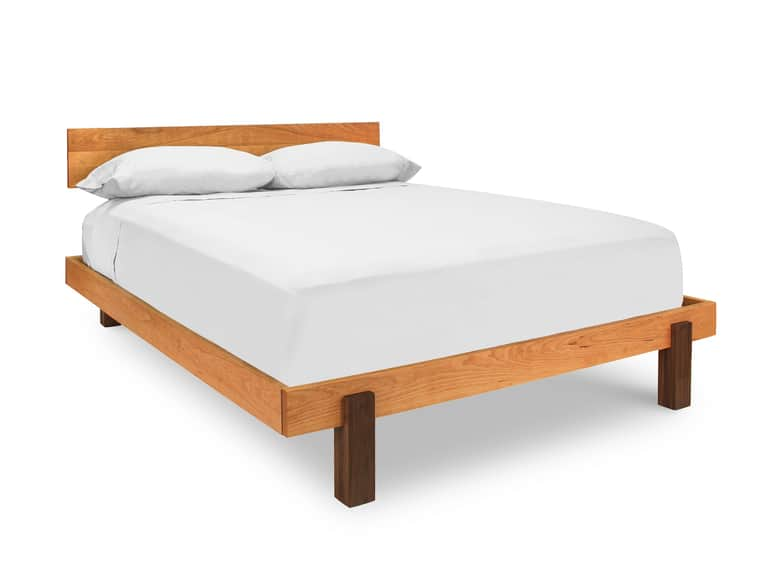
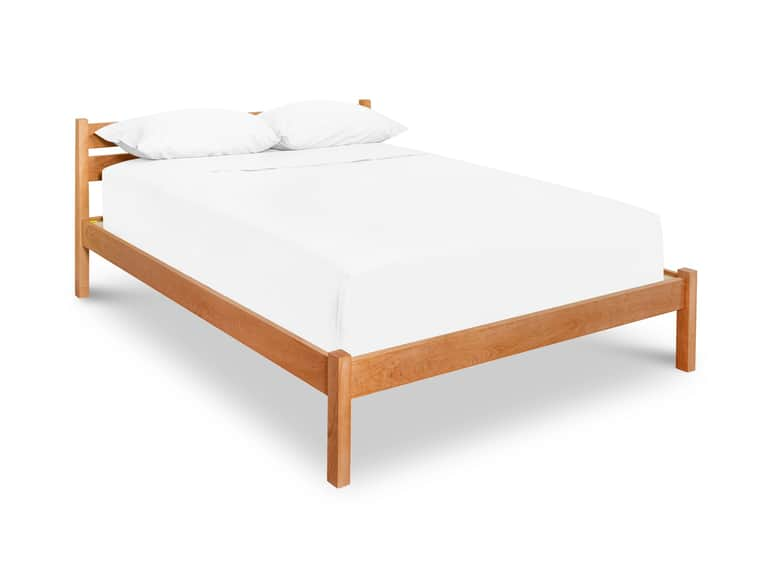
For people who value a straightforward wood frame and a clean-lined silhouette, a platform design can combine the mattress-supporting surface with the bed itself. For example, the Vergennes Platform Bed is described as a handcrafted solid-hardwood platform bed with a natural hand-rubbed oil finish. Its product details identify it as a platform bed; check the specific support construction and mattress requirements before deciding whether it suits your mattress.
Platform bases: a built-in foundation
A platform bed generally supports a mattress on a built-in surface rather than requiring a separate box spring. That surface may be made from slats, a solid panel, or another design specified by the manufacturer. The term “platform” describes the overall bed style, so it is worth checking what lies under the mattress instead of assuming every platform bed has the same structure.
Platform beds are popular for their streamlined appearance. The mattress often sits closer to the frame, giving the bed a unified profile that can suit contemporary, simple, or compact room layouts. Many designs are intended to be used without an additional box spring, which may reduce the number of components and help avoid adding unnecessary height. However, mattress compatibility remains the deciding factor.
Height varies considerably. A low platform may create a grounded, minimal look but can make getting in and out harder for some people. A higher design may feel more convenient and offer extra clearance beneath it. Compare the total height of the frame, base, mattress, and any topper with the height you find comfortable. If possible, use a tape measure to mark the approximate top-of-mattress level near your current bed.
Storage is another design-specific question. Some platform frames are close to the floor, leaving little accessible space underneath; others stand on legs or include drawers. A solid platform may offer a different ventilation arrangement from a slatted one, so check the maker’s guidance for both mattress support and airflow. A bed skirt can conceal the area beneath some frames, but it does not create storage clearance where there is none.
Platform beds can be a practical choice for people who want an integrated frame and support surface. The Modern American Platform Bed, for instance, is described as a solid-hardwood platform design with clean lines and an eco-friendly oil finish. As with any bed, verify the dimensions and support requirements before pairing it with a mattress.
Box springs and foundations: a traditional pairing
A box spring traditionally consists of a frame with springs inside, covered by fabric. In current bedding conversations, “box spring” is also sometimes used loosely for a supportive foundation that may not contain springs. These foundations can have a rigid internal structure and are designed to provide a stable surface for a mattress. Because names are not always used consistently, read the construction details rather than relying on the label.
A separate foundation may raise the mattress, create a familiar bed height, and fit inside a compatible frame. For some mattress-and-frame combinations, it is the required support. In other cases, a mattress is designed for a platform or slatted base and does not need an additional foundation. Adding one without checking can make the bed unnecessarily tall or create an unsupported combination.
Compatibility is particularly important with modern mattresses. Some foam, latex, and hybrid designs require a firm, level support surface with specific spacing limits. A traditional spring box may not meet those requirements, while a compatible foundation may. The correct answer varies by mattress model, so use the manufacturer’s instructions for the exact mattress rather than general assumptions about a material category.
Consider the full height before buying. A mattress placed on a foundation and frame can sit substantially higher than the same mattress on a low platform. That may be welcome if you prefer a taller bed, but it can make the room feel more crowded or make it difficult to sit comfortably at the edge. Also check that the foundation fits the frame and is properly supported, especially if the frame has a center beam or other weight-bearing components.
A foundation can offer a conventional, finished look and may be a sensible solution when the mattress maker recommends it. It is less ideal to choose one simply because it is familiar. Treat it as a component that must match both the mattress and the bed frame.
Adjustable bases: movement at the touch of a control
An adjustable base uses a motorized platform that can change the position of parts of the bed, commonly raising the head, the feet, or both. Depending on the model, it may also offer preset positions or other features. For someone who wants to change the angle of the sleeping surface for reading or relaxing, adjustability can be a major advantage over a fixed frame.
Not every mattress works with every adjustable base. The mattress needs to flex in the intended way, and the bed manufacturer may set specific requirements for thickness, weight, or construction. Check both products’ guidance before committing. A mattress that is not approved for an adjustable base could be uncomfortable, poorly supported, or unsuitable for the movement involved.
Room planning matters as much as mattress compatibility. An adjustable base needs access to a power outlet, and its movement may affect nearby furniture, walls, headboards, or bedside items. Think about the route for delivery and whether the base can be assembled in the bedroom. If it is a split design, check how the sections fit together and how controls or cables will be managed.
Adjustable bases can add height and weight, so measure the complete arrangement and check floor clearance. Storage underneath is not guaranteed: the motor, frame, legs, and moving sections may make the space less convenient than it appears. A carefully made room plan can help you avoid obstructing drawers, doors, or pathways when the base is raised.
Finally, consider the everyday controls. Ask how the base is operated, whether the controls are easy to reach in the dark, and what maintenance or warranty terms apply. The most feature-rich design is not automatically the best one; choose a setup that addresses a real need and fits the room comfortably.
How the four base styles compare
Each bed base type has a different balance of support, height, ventilation, and flexibility. The broad comparison below is a starting point, not a substitute for the product-specific instructions that determine compatibility.
- Slatted base: A series of supports beneath the mattress; may provide open space and a lighter appearance. Check slat spacing, rigidity, center support, and mattress approval.
- Platform bed: A bed design with an integrated mattress-supporting surface, which may be slatted or solid. It can simplify the setup, but construction and height differ by model.
- Box spring or foundation: A separate support component that can raise the mattress and suit certain frame-and-mattress combinations. Confirm what the product is made of and whether the mattress maker permits it.
- Adjustable base: A motorized support surface that changes position. It offers flexible angles but requires a compatible mattress, electrical access, and space for movement.
The best comparison is not “Which style is superior?” but “Which arrangement meets the mattress requirements and makes this room easier to use?” A guest room with a simple mattress setup may call for different priorities than a primary bedroom where bed height, movement, or under-bed access is central.
A practical checklist before you buy
Before choosing among bed base styles, gather a few details. These small checks can make the decision clearer and help you avoid returns, missing components, and awkward measurements.
- Start with the mattress instructions. Confirm the approved support type, maximum slat spacing, center-support requirements, and any restrictions on adjustable bases or foundations.
- Measure the mattress and frame. Check width, length, depth, and the interior dimensions of the bed frame. Do not assume all frames labeled for the same mattress size have identical usable space.
- Calculate total bed height. Add the base or foundation height to the mattress thickness and any topper. Compare the result with your preferred sitting and standing height.
- Map the room. Measure walking paths, door swings, closet access, bedside-table space, and the distance between the bed and other furniture.
- Check the clearance underneath. Measure the lowest usable point and account for rails, legs, beams, and drawers if storage or cleaning access matters.
- Think about ventilation and cleaning. Consider the base construction and how easily you can clean around or beneath it. Regular care should follow the mattress and frame makers’ recommendations.
- Review assembly and delivery details. Check the number and size of components, required tools, access to the room, and whether the bed can be assembled where it will be used.
Choosing a base for the room you have
In a small bedroom, visual and physical clearance can matter as much as storage capacity. A low or open frame may help the room feel less crowded, while a bulky foundation and tall mattress can occupy more of the visual field. On the other hand, a very low bed may be awkward if you prefer a higher seat. Try to balance the room’s proportions with your everyday comfort rather than following a trend on its own.
If you want to use the area under the bed, measure before buying boxes or baskets. A platform bed may have a solid lower structure or limited clearance, while a raised frame may offer more accessible space. Keep in mind that storage tucked beneath the bed can be difficult to reach and may make floor cleaning less convenient. A tidy room is not always one with the most hidden storage; easy-to-maintain storage is often more useful.
In a larger bedroom, the base can help establish the room’s overall character. A solid-wood platform brings a substantial, furniture-like presence. A frame with visible legs can feel lighter, and a separate foundation may create a more traditional profile. Coordinate the bed’s height and finish with nearby pieces, but let comfort and compatibility lead the decision.
For bedrooms with changing needs, flexibility may be worth considering. A bed that can be disassembled, moved, or reconfigured could suit renters or people who expect to change rooms. An adjustable base may suit someone who values different resting positions, while a straightforward fixed base may be easier to maintain. There is no need to pay for features that do not improve your actual routine.
Common bed base mistakes to avoid
One frequent mistake is buying a base based on appearance alone. A beautiful frame still needs to meet the mattress maker’s support specifications. Another is assuming that a platform bed always has slats, or that every product called a box spring contains springs. Look for measurements and construction details, and ask questions when information is missing.
It is also easy to overlook central support. Larger beds may need a center rail and legs that reach the floor to distribute weight appropriately. A frame that seems sturdy at the edges may not provide adequate support across its full span. Follow the bed maker’s assembly directions and do not remove structural supports to make room for storage.
Finally, avoid choosing a base height without considering the mattress thickness. A tall mattress on a high foundation can put the top surface well above the level you expected. Measure the combined height, then consider how it will feel to sit on the edge, reach the floor, and make the bed. These everyday details are more important than a specification in isolation.
The bottom line
Slatted, platform, box-spring, and adjustable designs each offer a distinct way to support a mattress. Slats can provide an open structure, platforms combine the bed and support surface, foundations can add height and meet specific mattress needs, and adjustable bases allow the sleeping surface to move. Within each category, however, construction and compatibility vary.
Begin with the mattress manufacturer’s requirements. Then consider your preferred bed height, room layout, airflow, cleaning access, storage needs, and the way you use the bedroom. A well-chosen base should support the mattress correctly while making the room feel practical and calm—not forcing you to work around an awkward fit.
The most useful bed base is ultimately the one that fits both the mattress and the life happening around it: easy to get into, easy to maintain, and appropriately scaled to the space it occupies.